There’s a difference between a yard that’s planted and a garden that’s designed — and in Middle Tennessee, the secret to both is starting with plants that actually want to live here. We’re in USDA Zone 7a, often on heavy clay soil, with humid summers and mild winters. Native plants are built for exactly those conditions: they need less water, shrug off our heat, feed local pollinators, and — when arranged with an eye for color, height, and bloom season — look every bit as polished as anything from a high-end nursery.
Here’s the plant palette I reach for again and again, organized so you have something blooming and beautiful from spring through fall.
Spring color (the wake-up)
For early color, start with wild columbine, lanceleaf coreopsis, spiderwort, and beardtongue (penstemon). Overhead, nothing says a Tennessee spring like an Eastern redbud unfurling pink-purple along its branches, or a flowering dogwood in full white bloom — both native, both stunning, both perfectly at home here.
Summer abundance (the showstoppers)
This is where a native garden earns its keep. Purple coneflower, butterfly weed, wild bergamot (bee balm), black-eyed Susan, and blazing star (liatris) carry the garden through the heat in waves of purple, orange, and gold — and the pollinators will not leave them alone. Mountain mint is a quiet hero: unshowy, but bees adore it.
Fall finale (the long goodbye)
As the season turns, goldenrod, smooth blue aster, and blue sage keep the color — and the pollinators — going right up to frost. A garden that peaks in fall is a sign someone designed it on purpose.
Structure that lasts all year — shrubs
Perennials give you the show; shrubs give you the bones. American beautyberry (those electric-purple berries in fall), Virginia sweetspire, oakleaf hydrangea, and native flame azalea provide structure, nesting cover for birds, and interest even in January when everything else is asleep.
Designing it so it doesn’t look “wild”
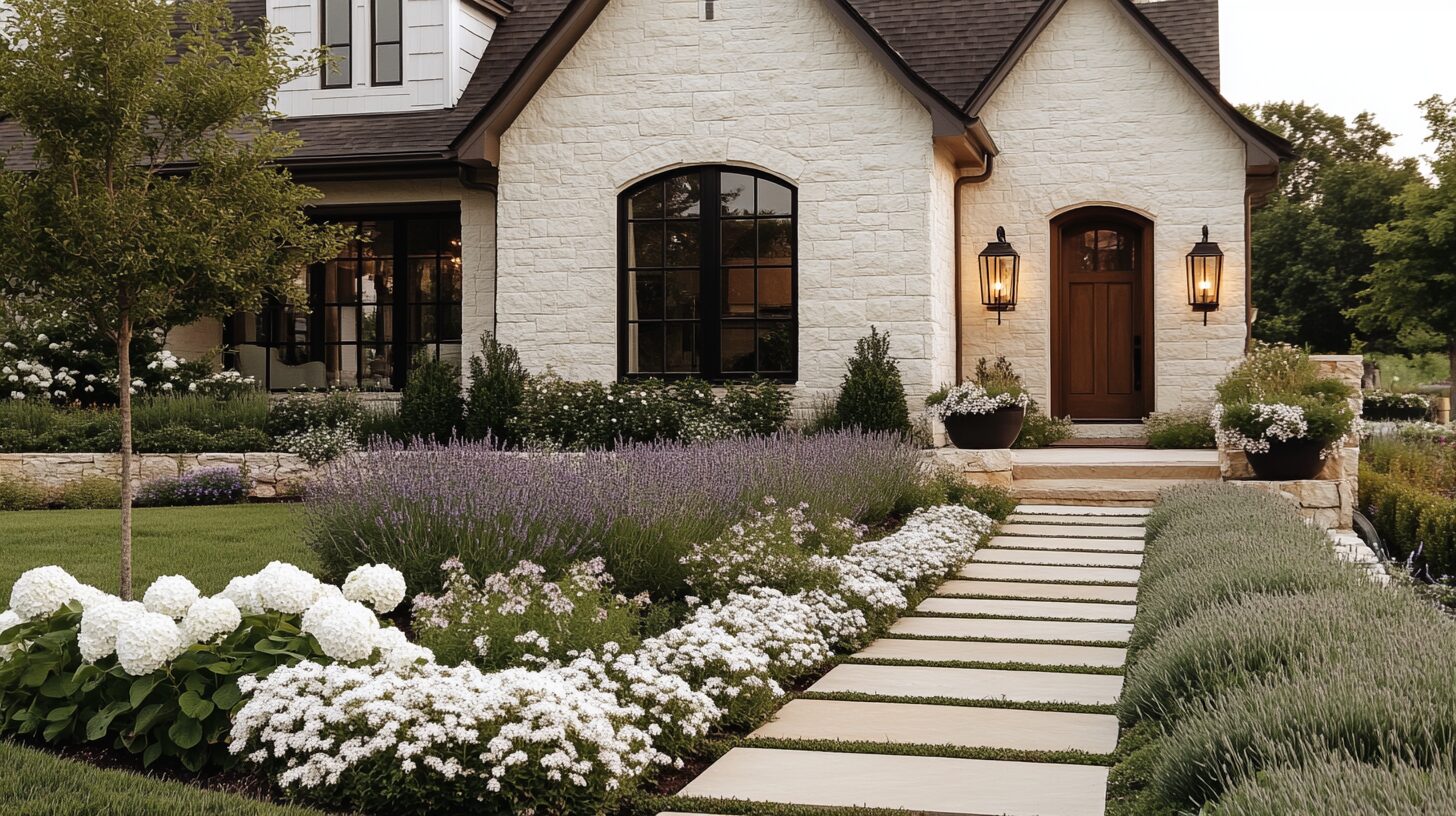
Here’s where the design eye matters. Native doesn’t have to mean unkempt. The trick is to plant in generous drifts rather than dotting single plants around, repeat a few key species for rhythm, layer by height (low edgers, mid-border perennials, tall anchors), and frame it all with structure — a clean bed line, a path, a fence, or a stone edge. That’s the difference between a meadow that looks accidental and a garden that looks intentional.
A Middle Tennessee planting tip
The best time to plant most native perennials, shrubs, and trees here is fall — roughly October through November. The soil is still warm, roots establish through our mild winter, and everything takes off the following spring. (Spring planting works too; just be ready to water through that first summer.)
A backyard full of native plants isn’t just lower-maintenance and better for the bees — it’s the kind of living, changing, color-through-the-seasons garden that makes a family want to be out in it. Which, when you get right down to it, is the entire point.
Frequently asked questions
What grows best in Middle Tennessee clay? Most natives on this list are clay-tolerant; coneflower, black-eyed Susan, beautyberry, and redbud are especially forgiving.
What’s the lowest-maintenance native plant for Tennessee? Purple coneflower and black-eyed Susan are nearly indestructible and bloom for weeks.
When should I plant? Fall is ideal; spring is fine with consistent first-year watering.
Want a garden designed for your yard, your soil, and your family? Let’s design it together.